
Posted on

A history of Blur and Britpop

Britpop Hero image

The news of a new Blur tour in 2023 got us reminiscing about Britpop – what seemed to us the golden age of pop music, the likes of which we may never see again. The UK was right at the heart of a musical revolution in the mid-90s and it was wonderful.

We thought we would indulge ourselves with an article dedicated to the history of Britpop and Blur – the chart battle with Oasis, the spats at the Brit awards, the gigs, the much-loved songs, the videos. Choose a side for the battle of Britpop and let’s revel in it.

We will also be looking ahead to the Blur tour, particularly the much anticipated dates for Blur at Wembley Stadium – and how you could get exclusive access for an unmissable night of classic Britpop!

A quick history of Britpop

Britpop wasn’t just about the music, it was a cultural movement, similar to the 1960s – where guitar pop ruled the airwaves, with bright catchy melodies and insightful lyrics. A combination of punk, rock & roll, glam rock and indie – a reaction to the darker grunge scene that was coming out of America at the time.

When Blur released their single, Popscene, in the spring of 1992, around the same time as Suede released their debut single The Drowners, is thought to be the birth of Britpop. In fact, Suede are often overlooked by the musical press when discussing Britpop, but their self-titled debut album was the fastest-selling debut album of all time.

At the time, Damon Albarn and the rest of Blur (Graham Coxon, Alex James and Dave Rowntree) were spending a lot of time hanging out in London’s vibrant social scene, centred around a club called Syndrome in Oxford Street. Bands would meet there, play their music on stage and hang out.

The movement was growing, but it was in 1993 when things began to escalate. Blur had toured America in ’92, during which Damon Albarn had grown resentful of American culture, particularly how it was beginning to infiltrate the UK. Blur’s second album, Modern Life is Rubbish, released in 1993, was a reflection of that. It was a bigger hit with fans, but Britpop was still just simmering, waiting for the moment to explode.

In 1994 Blur released their third album, Parklife, and it was a massive hit. Blur were then one of the biggest bands in the UK and British rock music became the dominant genre in the charts – inadvertently helped by the suicide of Kurt Cobain. Oasis released their debut album, Definitely Maybe, which took Suede’s record of best selling debut albums. The term ‘Britpop’ was by now in common parlance. It had officially arrived.

At the 1995 Brit Awards, Blur won Best Album for Parklife, beating Oasis and Definitely Maybe. The rivalry had begun…

Blur vs Oasis – The Battle of Britpop

Contrary to what came after it, Blur and Oasis were actually complimentary towards each other in the beginning. But a rivalry was stirred up in the media. It was North vs South. Upper Middle Class vs Working Class. Liam and Noel Gallagher were built for this kind of rivalry, calling Blur “Chas & Dave chimney sweep music”, while Blur retorted, referring to Oasis as “Oasis Quo”.

To be cynical about it, the rivalry benefitted both bands. There was a much publicised battle to get to number one, as Blurs Country House was released on the same day as Oasis’ Roll With It. Country House made it to number one, but both singles sold over 200,000 copies thanks to the publicity behind the rivalry.

During their ‘Number One’ performance of Country House on Top of the Pops Alex James wore an Oasis t-shirt.

Since the dust has settled on The Battle of Britpop, Damon Albarn and Noel Gallagher have become good friends, and collaborated together on each other’s music. They don’t talk about the events of the mid-nineties, but they have a great respect for each other. Albarn commented “I value my friendship with Noel because he is one of the only people who went through what I did in the Nineties.”

The Peak of Britpop

By 1996, Britpop was everywhere. Pulp had released the album Different Class in 1995 and had made up the Big Four of Britpop with Blur, Oasis and Suede. They were far from the only ones though – Supergrass, Sleeper, Elastica, Shed Seven, Cast, The Lightning Seeds, Ocean Colour Scene and the Boo Radleys were all at the heart of this wave.

Britpop was reflected in the wider culture. TFI Friday, Three Lions (the anthem of Euro ’96), the NME, lad’s mags, bucket hats – even the politics when in 1997 the stuffy John Major was replaced as Prime Minister by a youthful Tony Blair. It all reflected the attitude and optimism of Britpop.

Britpop’s Decline

In 1997, Oasis released Be Here Now – one of the most highly anticipated albums of all time, on the back of 1996’s (What’s the Story) Morning Glory? It was a success, but not to the extent that everyone had predicted and hoped. Musical press at the time criticised it for being over-produced, taking away the raw grit of previous records. At the same time, Damon Albarn had got over his dislike of everything American, with their self-titled fifth album having major influences from the States.

This came at a time when Britpop was being challenged in the charts – the Spice Girls brought with them a fresh wave of Pop, while bands like Radiohead and The Verve were releasing music with more depth, which appealed to the public. These were followed by Stereophonics, Travis and Coldplay to signal a new era of British rock music.

Blur Post-Britpop

The end of Britpop did not mean the end of Blur. They changed with the times, and Graham Coxon took on a more prominent role within the band’s makeup. He was the driving force behind the album Blur, bringing lo-fi and underground influences. This alienated many Blur fans, but critics, who gave it positive reviews, widely applauded the courage to reinvent themselves. Song 2, from the album, became their most recognisable songs in America, giving them a whole new audience.

In 1999 they released the album 13, featuring the hits Tender and Coffee & TV. It was a further step away from the Britpop sound, but again it received praise from music critics.

They spent the next two years touring, before hitting the studio again in late 2001. Before they had finished recording, however, Graham Coxon left the band – recognising that they “needed some time apart”. He went on to pursue a solo career, and while Blur kept releasing music after he left, the band members also pursued their own endeavours. Damon Albarn worked on the animated band Gorillaz, while Alex James worked with Sophie Ellis-Bextor and made some cheese.

The Blur Reunion

In December 2008, Blur announced that the original lineup would reform for a concert at Hyde Park – the preview shows at the Manchester Evening News Arena were the first times they had been on stage together for 9 years. They also headlined Glastonbury Festival that summer, and released their second greatest hits album.

It wasn’t until 2015 that Blur released their next studio album – their first one in twelve years. Shortly after they toured the album, however, they announced another hiatus, which has remained in place other than a brief reunion for a charity event in 2019.

Blur Tour 2023

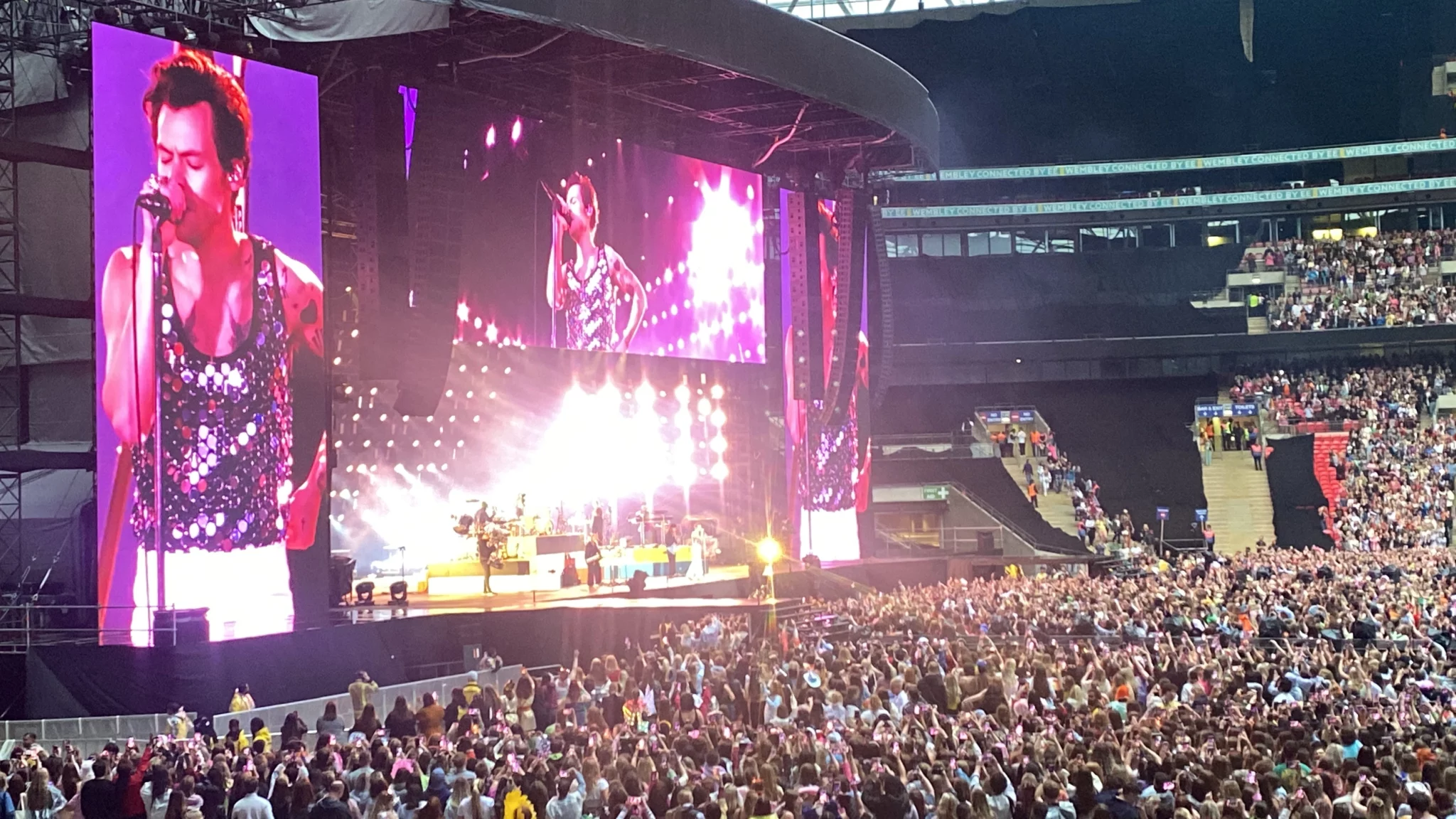
In November 2022, they announced that they would be performing at London’s Wembley Stadium on Saturday 8th and Sunday 9th July 2023 – the only UK appearance for the foreseeable future. They added the second date due to the phenomenal demand of the first show.

It will be their first ever gig at Wembley Stadium, and promises to be an incredible experience with support from Slowthai and Self Esteem.

How to get tickets for Blur at Wembley Stadium

As we mentioned above, demand for the Wembley shows has been huge. Getting tickets is difficult. However, one option for you to consider is hospitality tickets. We offer a range of options from Club Wembley tickets, which will grant you exclusive access to a range of bars and lounges throughout the stadium, to the Golden hospitality package, which gets you access to an exclusive hospitality lounge, complimentary drinks (beers, wine and soft drinks) and access to the Club Wembley after-party.

Then there is also the option of a Private Box, with a full menu served before the concert, and nibbles, drinks and a 5-star service available throughout. The perfect setup for an unmissable night of great music and classic songs.

If you are interested in any of these packages, get in touch with us today.
Posted on

Top 10 Facts you didn’t know about Harry Styles

Harry Styles hero image

Okay, we’re going, to be honest with you right from the off. Here at Events Hospitality, we are probably not the target audience for bottomless facts about Harry Styles.  Our Harry Styles trivia was close to zero. We can’t claim to have followed his musical career from the early days of One Direction, nor could we tell you whether he has a famous girlfriend, when he was born, which magazines he has been on the cover of or what movie he has starred in.

Well, we couldn’t until we started work on this article – now we are his biggest fans!

We have prepared some Harry Styles facts for you, so that you can get to know him like we know him – as the music turned movie star, that is recognised by millions all around the world and whose favourite colour is orange. And blue. He has two favourite colours. Because why should Harry Styles be limited to just one favourite colour? He’s Harry Styles.

Anyway, I’m getting carried away. Let’s crack on with some fun Harry facts so that next time you get bamboozled with Harry Styles quiz questions by a teenage girl, you’ll have all the answers.

Harry Styles Facts

  1. One Direction was not Harry Styles’ first band
    Harry Styles was always destined to have a musical career, and long before he hit the big time with One Direction, he was in a pop-punk band called White Eskimo. Styles was the lead singer, unsurprisingly, and they played music influenced by Foo Fighters and Blink 182. What could have been…
    White Eskimo carried on without Harry Styles – releasing a cover of Joe Jackson’s Is She Really Going Out With Him? in 2018.

  2. Harry Styles is a glory hunter
    Despite having been born in Redditch, Worcestershire, Harry Styles is a Manchester United fan, which suggests that there are fundamental flaws in his personality.
    (Okay, we’re being unnecessarily harsh here – he moved to Holmes Chapel, Cheshire when he was young, so we’ll let him off. Even though Stoke City is closer and he’d have been at just the right age to appreciate Tony Pulis managing in his prime)

  3. Harry Styles can bake
    Well, actually we don’t know that for sure. What we do know is that he worked at Mandeville Bakery for £6 an hour before his audition for X-Factor. By way of demonstrating quite how big a deal Harry Styles is, when a toilet block situated opposite Mandeville Bakery went on sale, it made the news. I mean, imagine being so desperate for content that you just write any old rubbish about Harry Styles!

  4. Harry Styles conquered America aged 17
    One Direction’s debut album Up All Night was the first debut album by a British band to reach number one in the US charts. Harry co-wrote three of the songs. To date, the One Direction world tour Where We Are in 2013 is the highest-grossing tour of all time by a vocal group.

  5. Harry Styles can play the guitar
    (Really wishing we hadn’t committed to 10 facts at this point, to be honest)
    Yes, Harry Styles plays the guitar to help in the songwriting process. He even gets it out (the guitar) on stage every now and then, playing a unique* blend of rhythm and lead.
    *That may be code for ‘not very good’, not sure.

  6. Harry Styles wore a Gucci dress
    In a 2020 shoot for Vogue, Harry caused controversy by wearing a dress. For some people this was outrageous and worth getting upset about – other events of that year seemingly offering them absolutely no sense of perspective.

  7. Harry’s sick went on eBay
    Harry Styles fans adore him. And are nuts. Like, proper nuts. Once, when he was car sick he noticed someone collecting what he had deposited and putting it into a bag. A few days later, his mum sent him a link to an Ebay listing where someone was selling his vomit.

  8. Harry Styles has a university course about him
    In 2023, Texas State University is going to be offering a course entitled “Harry Styles and the Cult of Celebrity: Identity, the Internet and European Pop Culture”. Presumably this list of Harry Styles trivia will form an integral part of the syllabus?

  9. Harry Styles’ debut solo album was called Harry Styles
    No, you’re getting desperate for Harry Styles trivia.
    In 2017, Harry’s first album was released, and he decided to call it Harry Styles, just to leave everyone absolutely clear on the fact that this was in fact a solo album, and not a One Direction album. Years later, it would go on to help content writers who need to use the words ‘Harry Styles’ a certain number of times in an article.

  10. Harry Styles is touring the world in 2022-23
    Harry is touring the world at the moment, Love on Tour, which will take a break in November 2022 and pick up again in Australia in February 2023. The tour includes four nights at Wembley – June 13th, June 14th, June 16th and June 17th. 


Bonus Harry Styles Quiz Questions

Okay, so now you have fended off all of their questions, it’s time to go on the offensive with a load of quick-fire quiz questions of your own:

  1. When is Harry Styles’ birthday? 1st February (1994)
  2. What is Harry’s middle name? Edward
  3. What year did Harry audition for X-Factor? 2010
  4. Where did One Direction finish on X-Factor? Third
  5. Who won X-Factor to beat One Direction? Matt Cardle (who?)
  6. What was the last song One Direction released? History
  7. What is Harry’s biggest-selling solo single? Watermelon Sugar
  8. What was Harry’s third (and latest, at the time of writing) solo album called? Harry’s House
  9. What is Harry Styles’ estimated net worth? £100 million

What was Harry’s first film that he appeared in? Dunkirk

Posted on

The history of the Carabao Cup

Carabao cup hero image

The Carabao Cup is still one of the major honours in English football, with qualification to the Europa League for the winners, regardless of league position. It had become a bit of a laughingstock – but that seems to be changing again. For many clubs, the Carabao Cup is one of the most realistic opportunities to qualify for European football, and have a trip to Wembley. You only have to look at the last 10 finals to see how seriously big teams now take the Carabao Cup.

We thought we would dedicate this article to this previously-maligned cup competition, and better explain what is the Carabao Cup, looking at the history of the Football League Cup, the format of the competition, how it has changed over the years and how you might be able to purchase Carabao Cup tickets for the later stages of the competition.

Carabao Cup History

Humble beginnings

Originally, the idea for a second cup competition in English football was for it to be a consolation cup for teams that had been knocked out of the FA Cup, and then later to allow clubs to generate extra revenue which might offset proposed changes to the football league structure.

In the early 60s, English football was losing prestige on the international stage. Attendances were dwindling, English clubs were struggling against European competition, and tensions between the Football League and the FA were high, mainly due to disagreements about how to divvy up revenues.

However, the majority of the bigger clubs had installed floodlights, which made playing matches during the evenings a possibility – opening the gateway for more matches (and more revenue). So they introduced the Football League Cup in the 1960-61 season. It is fair to say that the response to the announcement was tepid at best. The Times’ correspondent wrote:

“Where men like Count Bernabeu with his wider horizons, think in terms of a European League for the future in which a lead could surely now be given jointly by our leaders, the Football League propose next season to implement their useless Football League Cup to be played in midweek. It gets the players, the clubs and the public nowhere.”

Nevertheless, the inaugural EFL Cup took place and was won by one of the big clubs, Aston Villa, who at the time were the most decorated club in English football. The cup final was played over two legs – the second leg was not played until after the start of the following season, due to fixture congestion! Rotherham won the first leg 2-0, but Villa took the trophy with a 3-0 win at Villa Park, after extra time. The attendance for the two legs combined was under 45,000.

The competition struggled to capture the imagination of the public for the following few years, as the next three finals were all won by teams that had never won a major trophy before – Norwich City, Birmingham City and Leicester City.

Taking action

The big benefit of the League Cup, even though it hadn’t really taken off, was that it gave the Football League negotiating power with the FA and UEFA. The Football League Secretary, Alan Hardaker, threatened to boycott the UEFA Cup if UEFA didn’t grant the winners of the League Cup European qualification. UEFA agreed, as long as the team was in the First Division (now called the Premier League).

Tottenham Hotspur were the first team to qualify for the UEFA Cup, when they won the League Cup final in 1971. In the years prior to that season, it had not been compulsory to enter the League Cup, and Everton had opted out so that they could concentrate on the European Cup. Entry in the competition was compulsory for all 92 teams in the Football League from the 1971-72 season.

Previous names of the EFL Carabao Cup 

Some would argue its added charm, some would argue that it’s undermined the competition, but the League Cup has been sponsored by many different organisations over the years, which has led it to have many names:

1981-86: The Milk Cup

1986-1990: The Littlewoods Challenge Cup

1990-92: The Rumbelows Cup

1992-98: The Coca-cola cup

1998-2003: The Worthington Cup

2002-12: The Carling Cup

2012-16: The Capital One Cup

2016-17: The EFL Cup (No Sponsor)

2017-2024: The Carabao Cup

The EFL Cup in the modern game

The EFL Cup will never be able to compete with league competitions, the FA Cup or a European competition, but it does still have a role to play in modern football.

It has had to adapt – there is now no extra time in any round other than the final as teams were worried about playing too many matches, with draws going straight to penalties. Until 1997, finals that finished level after extra time would go to a replay at a neutral venue. Premier League teams don’t join until the second round, and teams in European competitions get a bye for the first two rounds. The away goals rule does now not apply in the semi final. The competition has had to fit around the wishes of the clubs.

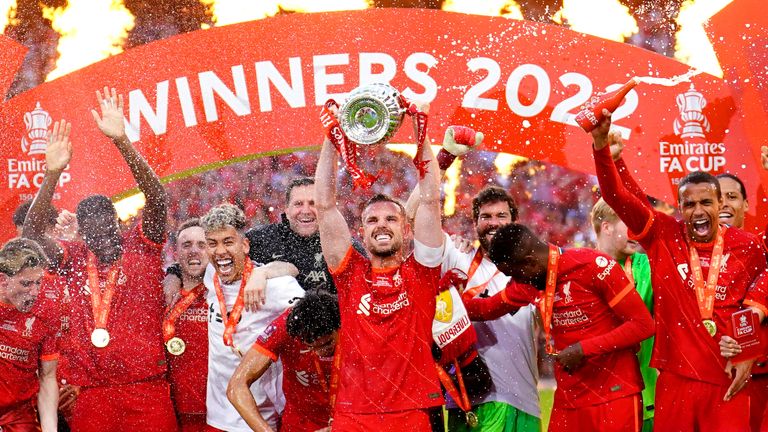
These days, the ‘bigger’ Premier League teams involved in the early rounds of the competition tend to rotate their squad to give the fringe and youth players a chance to get fitness and experience. While this has undermined the competition a bit, it has also helped these clubs to see it as a more worthwhile cup to play in. A great way to give players much-needed minutes on the pitch. The fact that Liverpool, Manchester City and Chelsea have dominated finals in recent years suggests that clubs are taking it seriously again. For the smaller clubs, it represents a great chance to play at Wembley Stadium.

League Cup Facts

Some quick facts about the Carabao Cup:

Most League Cups: Liverpool – 9 (Manchester City – 8)

Most League Cup Final appearances: Liverpool – 13 (Manchester City, Aston Villa, Chelsea, Manchester United and Tottenham Hotspur – 9)

Player with most League Cup winner medals: Sergio Agüero and Fernandinho for Manchester City – 6

Most goals (career): Ian Rush – 49

Player with most EFL Cup final appearances: Ian Rush for Liverpool (1981–1984, 1987, 1995), Emile Heskey for Leicester City (1997, 1999, 2000), Liverpool (2001, 2003) and Aston Villa (2010), Fernandinho for Manchester City (2014, 2016, 2018–2021) – 6

Biggest win in a final: Swansea – 5-0 vs Bradford City in 2013

How to get Carabao Cup tickets

The EFL Cup is one of the easier competitions to get match tickets for. Many clubs struggle to sell out for these matches, and away fans are usually given much larger allocations compared to the Premier League.

As such, the prices are usually a little lower, even for the hospitality packages. It could be a great way to experience matches from a slightly different perspective, surrounded by great food and drink. We offer hospitality packages at many different Premier League clubs, so get in touch with us today if you are interested in these packages.

How to get Carabao Cup tickets for the Final

The final of the Carabao Cup is a different matter – tickets can be very difficult to come by as they are for all major finals. However, hospitality packages for the Carabao Cup may come to your rescue…

On top of the hospitality packages that we offer at Premier League grounds, we also have many options for tickets at Wembley Stadium, ranging from Club Wembley packages, which include full access to a range of bars and restaurants within the stadium, to Private Box packages, with a 3-course fine dining meal and a free bar.

If you are interested in Carabao Cup tickets, get in touch with us today and we can help you find the right package for you and your guests.

Posted on

Experience the Tottenham Hotspur Stadium

tottenham-hotspur-game

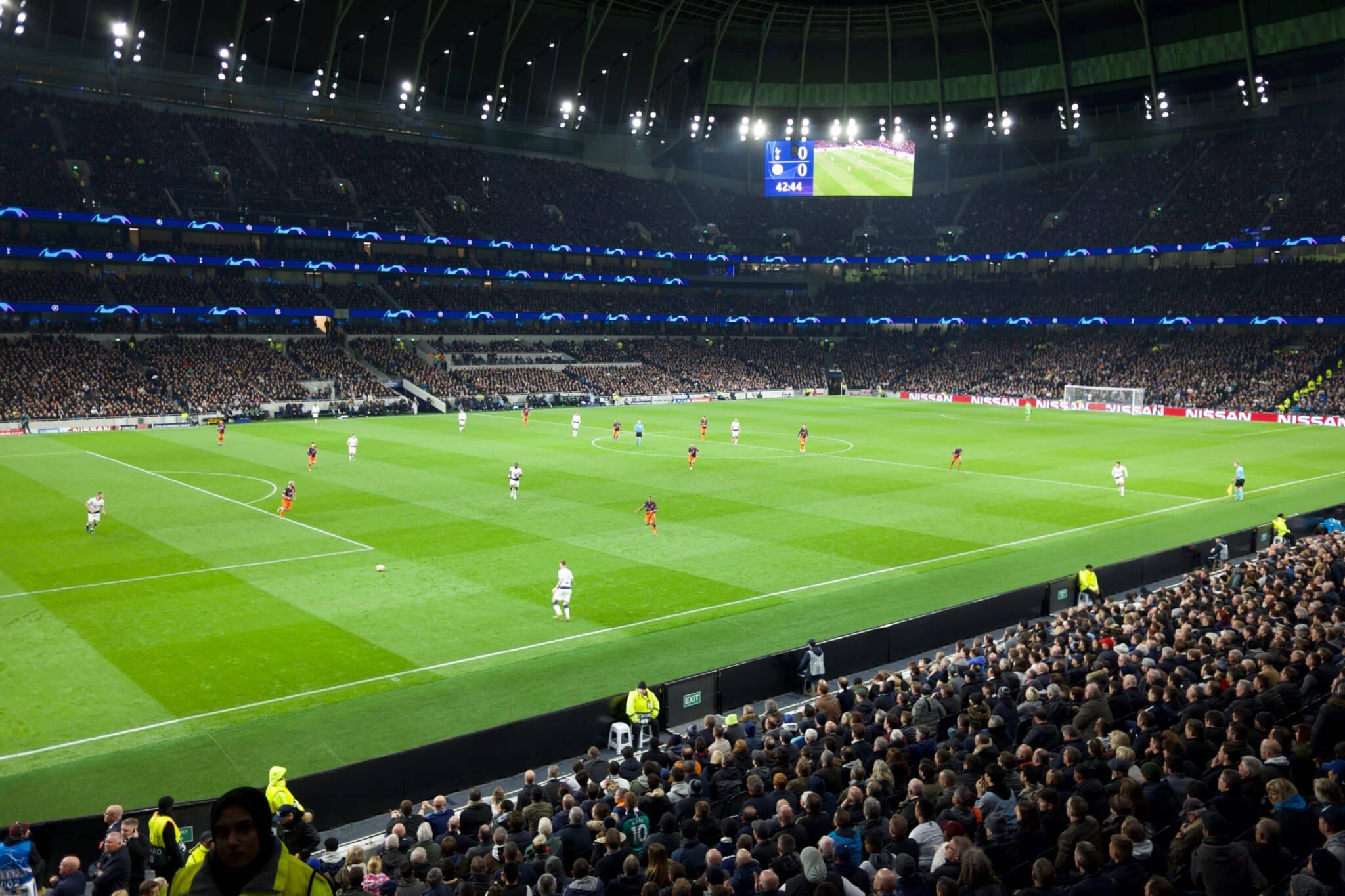
Arguably the most impressive stadium in English football, the Tottenham Hotspur Stadium was officially opened in 2019 as the new home of Tottenham Hotspur FC.

We thought it would be a good idea to dedicate this article to the Tottenham experience; its rich history, the facilities it possesses, the stadium tours you can go on, the tickets you can buy and crucially, how a club with Tottenham’s history have managed to bag themselves such a top quality stadium. Did they bother installing a trophy cabinet? (Okay, they have won eight FA Cups, but you have to be of a certain vintage if you can remember any of those wins)

The History of the Tottenham Hotspur Stadium

White Hart Lane

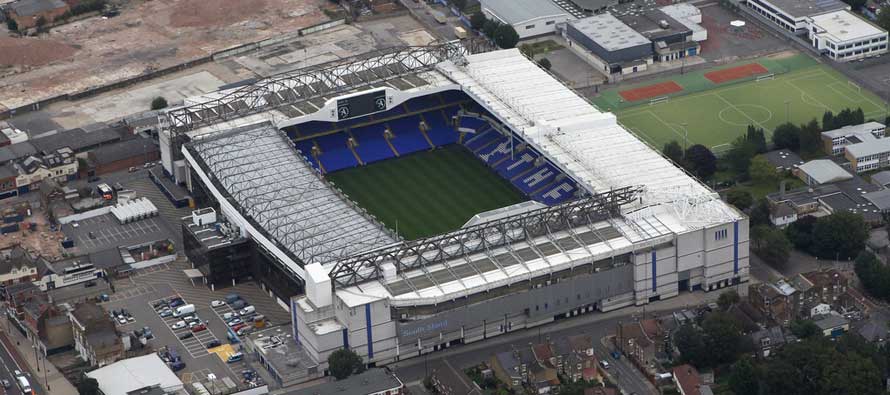
White Hart LaneWhen Tottenham Hotspur FC was formed in 1882 they used to play their matches on public land at Tottenham marshes. As they began to attract large crowds, they needed to move to somewhere a bit bigger. Spurs first rented a pitch at Northumberland Park, but in 1899 settled in a piece of land owned by Charringtons Brewery, behind the White Hart pub – White Hart Lane was born.
That old ground saw some truly great players – Bill Nicholson, Danny Blanchflower and Jimmy Greaves in the 60s, Glenn Hoddle and Ossie Ardiles in the 80s, Gary Lineker, Jürgen Klinsmann and David Ginola in the 90s, Dimitar Berbatov and Gareth Bale in the noughties. And we haven’t even mentioned Helder Postiga.

The problem was, though, that White Hart Lane was just too small for where Tottenham wanted to be, with a capacity of just 36,000 – not big enough for a team that wanted to be competing for the Premier League title and a European trophy. They decided to explore other options.

Planning the Tottenham Hotspur Stadium

In 2007, Tottenham announced that they were looking at the redevelopment of the White Hart Lane site as one option in their pursuit of a larger home ground. Named the Northumberland Development Project, the plans were controversial – they required 8 locally listed buildings to be demolished, as well as two nationally listed. After a long wait involving appeals, High Court rulings and Eric Pickles, eventually the plans were approved, with Compulsory Purchase Orders for nearby property, in 2014.

Building work for the project had actually begun in 2012, but they did not start construction on the stadium itself until after the various disputes were settled and the land acquired in 2015. Demolition of the old White Hart Lane stadium began after Spurs’ final home match of the 2016-17 season (which saw Spurs win against Man United 2-1).

Building the Tottenham Hotspur Stadium

The Club have worked hard to ensure they have reflected the history of Tottenham Hotspur in the stadium’s construction. They have mixed the concrete foundations of White Hart Lane with concrete to form the foundations of the new stadium, bricks from the old East Stand have been used to make the Shelf Bar, and have placed heritage plaques around the stadium to mark out the points of the old stadium.

In the construction process Spurs have decorated the exterior of the stadium with 35,000 decorative tiles, over 4,800 metal panels and over 2,500 glass panels.

While construction was taking place, Tottenham Hotspur became the first club to play their Premier League home games at Wembley Stadium (although Arsenal did play Champions League games there previously). They extended their stay there well into the 2018-19 season following further delays – the delay down to a wait for the issuing of a safety certificate.

Eventually, the first team managed to play their first match in the stadium in April 2019 – a game against Crystal Palace that they ended up winning 2-0. Son Heung-min scored the first official goal in the Tottenham Hotspur Stadium.

Tottenham Hotspur Stadium facilities

The stadium has been designed to be one of the best in the world. Here are some quick facts:

Stadium capacity: 62,850

Stadium Height: 48 metres

Number of internal floors: 9

Gross internal area: 119,945 Metres squared

Number of LED screens: 4

Number of LED Floodlights: 324

Number of Season ticket holders: 42,000

Number of Wheelchair Bays: 265

These facts merely scratch the surface. There is a large open area, as big as Trafalgar Square, to act as the main access point for home fans, which can be used for community activities. While they designed it as a bowl, there are still four distinct stands – the South Stand has been designated as ‘the home end’, and is the largest single-tier stand in the country. This is where Spurs fans create the atmosphere.

The pitch is much bigger than the one that was at White Hart Lane, and there are two of them. In order to be able to have NFL games played in the stadium, there is a retractable pitch which makes way for a synthetic turfed pitch. Spurs were the first British team to host an NFL game at their stadium (Wembley being the only other Stadium in the UK to have done it).

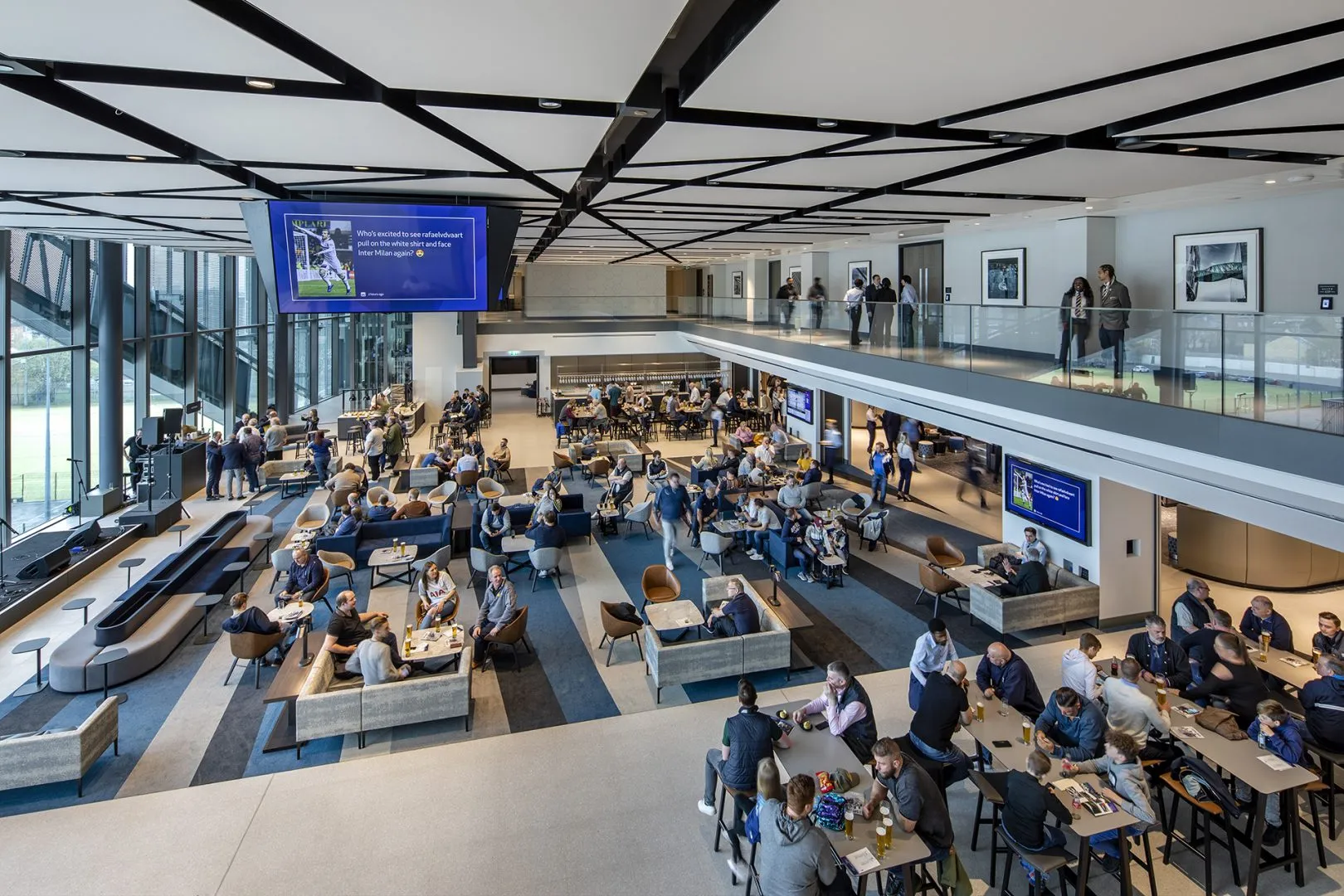
For the players, they have fitted the changing rooms with hydrotherapy pools, warm-up areas, lounges, restaurants and creches. For fans, you can visit one of the many bars (including the longest bar in Europe – the Goal Line Bar at 65m long), plus there is an in-house bakery, countless food outlets and micro-brewery – which can produce 1 million pints a year and deliver 10,000 pints a minute.

For the fan that likes to stay connected, there are WiFi access points with Bluetooth beacons to give it greater bandwidth than any other stadium, and plenty of premium lounges for fans that want that little bit extra.

The Tottenham Experience

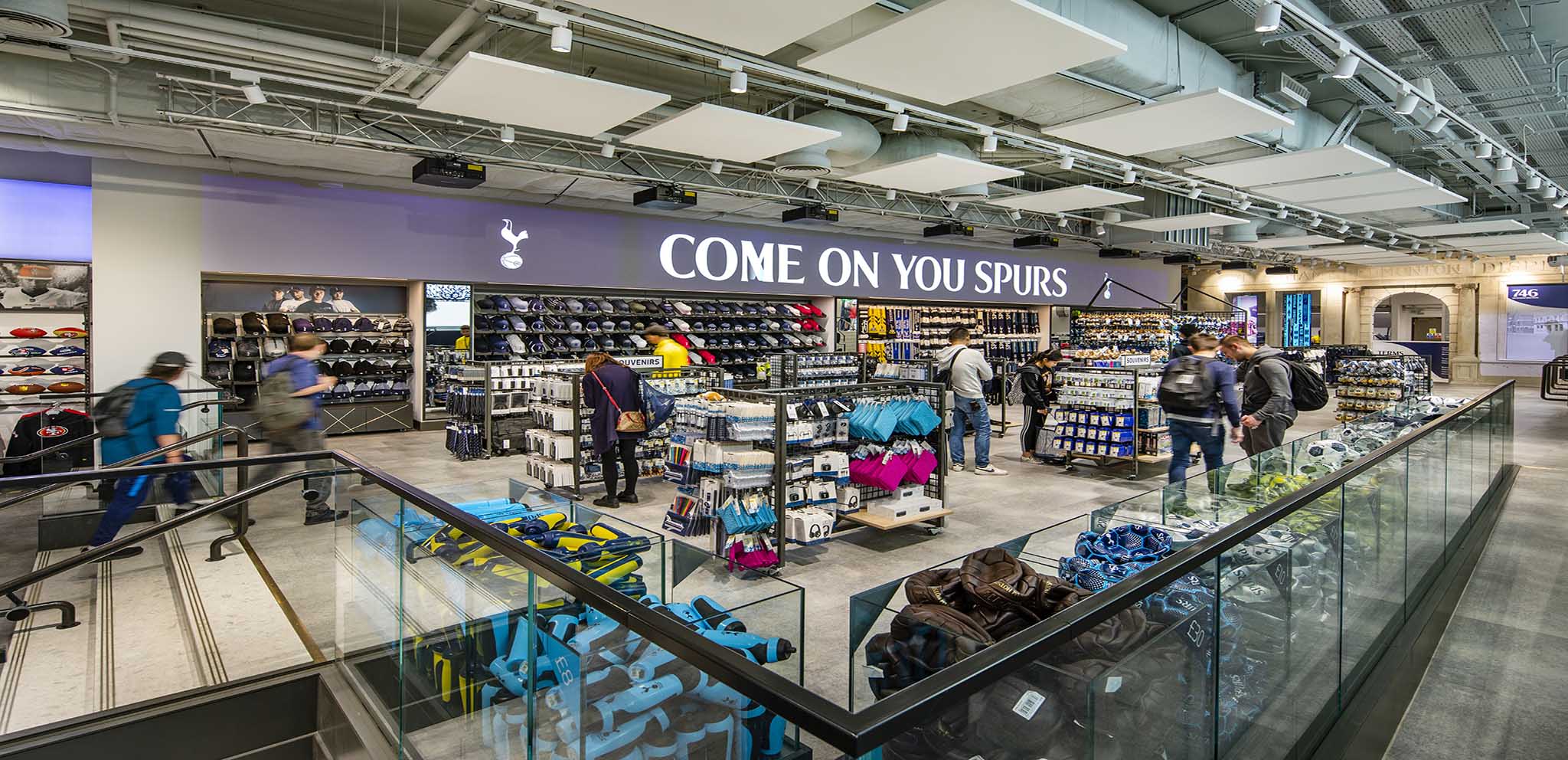
Tottenham ExperienceThe Tottenham Experience is the main arrival hub for visitors. It includes the club shop, club archive and the museum. The shop is the largest club shop in Europe, whereas the museum makes use of a Grade II listed building on the site. You’ll be able to see the FA Cup, the Football League trophy, the Uefa Cup and probably a picture of Teddy Sheringham.

This is also where you would begin stadium tours.

Tottenham Hotspur Stadium Tours

What we really like about the Tottenham stadium tours is that you can select a self-guided tour. You don’t have to trudge around in a group of strangers, you are free to roam about and explore for yourselves. Highlights include seeing how the players prepare for a match and walking down the tunnel to the pitch. It’s fascinating to see behind the scenes at such an impressive stadium, even if you’re not Spurs fans. You can also take the Spurs stadium virtual tour here.

Why is it called the Tottenham Hotspur Stadium?

It’s not the most inspiring name, is it? Well, it all comes down to money. Spurs want to sell the naming rights to the stadium, but they also want to make sure they get the right price for it. The stadium is thought to have cost around £1.2 billion in total, and they want to make some of that back through naming rights – around £20 million a year. So far, nobody seems to meet that valuation, but it only seems a matter of time before we have to get used to calling it something different.

How to get to the Tottenham Hotspur Stadium

The Tottenham Hotspur Stadium is accessible from a number of London Overground, London Underground and National Rail stations. White Hart Lane is the closest, just 200m away, but Tottenham Hale, Northumberland Park and Seven Sisters are all within walking distance (although some are 20-25 minutes away). There is a walkway from White Hart Lane station to the ground, similar to the one at Wembley.

spurs lounge

In terms of buses, there are supposedly 144 buses an hour that pass by the stadium. Look for the routes 149, 259, 279, 349, and W3.

What hospitality options are available at the Tottenham Hotspur Stadium?

As you would expect from a modern stadium in the Premier League, Spurs have some fantastic hospitality packages. With Tottenham tickets quite hard to come by Our favourite is the Premium Experience: You get exclusive access to the premium tier cash bars pre and post match, a luxury padded seat, fast track entrance to the stadium, unlimited light bowl food and a complimentary drink at half time. A wonderful way to experience a Premier League match.

Final Word

The Tottenham Hotspur Stadium is one of the finest stadiums in the country, and going there is a truly unique experience. If you are interested in going, our advice is to make a full day of it. Maybe even a weekend.

Head down to London early – book yourself in for a stadium tour and get the Tottenham Experience. Spend some time having a drink and some food with season ticket holders around the ground before going for the Premium Experience.

Try to get tickets for the best games in English football – the North London derby. Some of the Spurs vs Arsenal matches have been the best the Premier League has ever seen, and with Arsenal having a chance of winning the title at the time of writing, there will be added spice to the match.